#TextileTuesday and the Airing of the Quilts

This Saturday, October 3, is the Berkeley Modern Quilt Guild’s third annual Airing of the Quilts. In many places this is a spring tradition - freshening the quilts after they’ve been in use for the long winter - but the BMQG fall version makes sense too: who wants to use a quilt if it smells like the closet it was kept in all summer?

Ahead of the event on Saturday, we wanted to take a look at some of the quilts in the Museum collection.
26.3.1

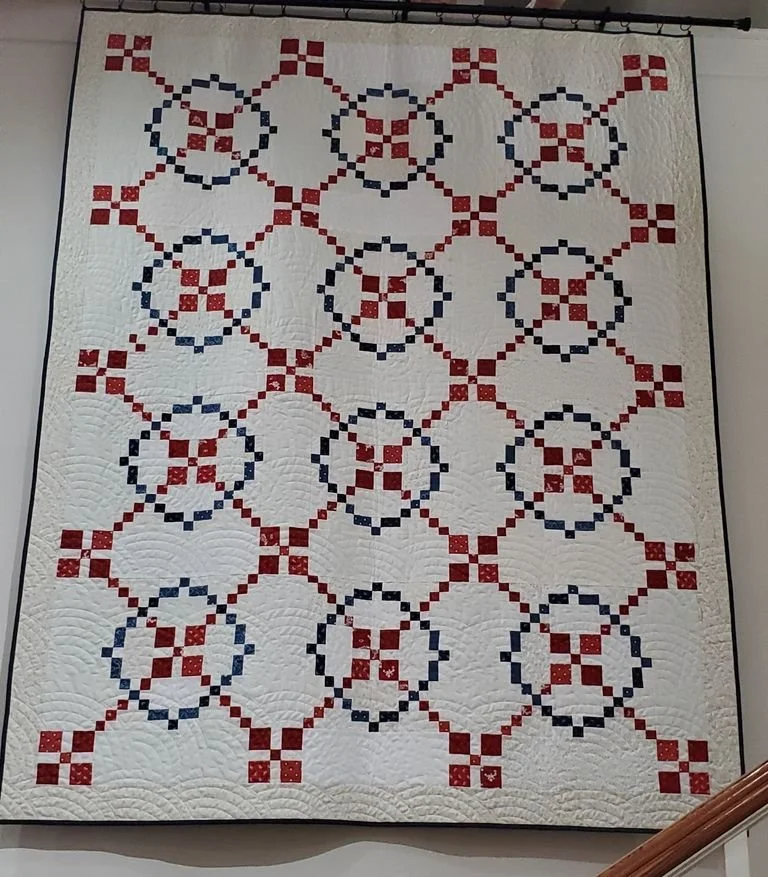
Our most modern (or most recently created) quilt is the “Burgoyne Surrenders” quilt hanging in the Museum lobby, which was made in 2025-2026 by the Berkeley County Quilters in honor of the 250th anniversary of the United States' founding. This quilt pattern, also known as the “Burgoyne Surrounded,” is said to be inspired by the defeat of British General John Burgoyne in 1777 at Saratoga, New York. Burgoyne’s troops are represented by the center squares, surrounded by American forces. This pattern first became popular in the late 1800s and early 1900s, perhaps around the time of the centennial of the Revolution.
L23.12.8

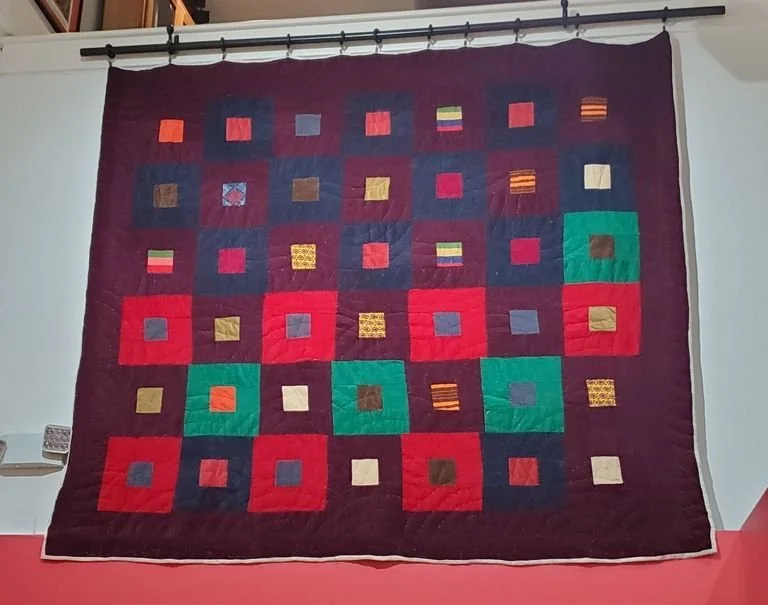
Our next quilt is on display in the Indigenous South Carolinians exhibit. It is on loan from former Wassamasaw Tribe of Varnertown Indians Spiritual Leader Loretta Clark Leach, granddaughter of Geneva Varner Clark. Geneva Varner Clark (1905-1975) was a matriarch of the Wassamasaw Tribe. In 1938, WPA photographer Marion Post Wolcott photographed Clark and three of her children. Varner identified as Native American, referring to herself as a “Summerville Indian.” The photos by Post are the only known photos of members of a Lowcountry Indigenous community housed in the Library of Congress.
95.9.1

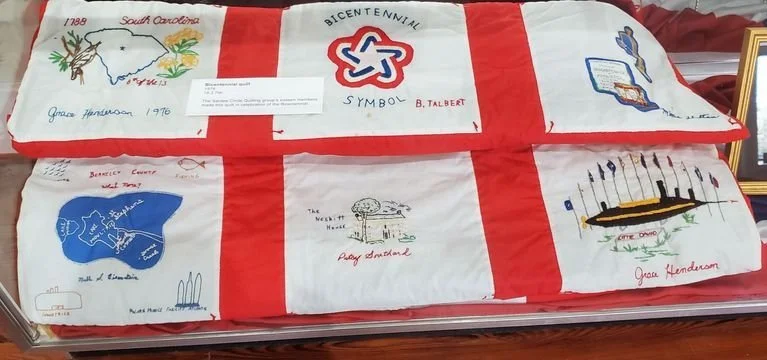
Finally, the bicentennial quilt was recently removed from our temporary exhibit 1776/1976/2026 and returned to collections storage. This quilt was made by the Santee Circle Quilters (also known as the Santee Circle Home Demonstration Club) in 1976. The squares display different aspects of Berkeley County history and give the names of the sixteen quilters.

Dianah Johnson of White House Plantation

To continue telling a diverse history of the Revolution, the Museum and Berkeley 250 are working to research the lives of the War's Berkeley County women.

Formerly enslaved at White House Plantation in Goose Creek, Dianah Johnson was a teenager when she "ran off" in 1780. In November 1783, Dianah embarked from New York City on the L'Abondance, a British ship used to transport formerly-enslaved Black Americans to Nova Scotia. Nothing else is known of her life, though there is a marriage of a Dianah Johnson and Mingo Leslie in New York City in 1783. The embarkation list for the L’Abondance shows Mingo Leslie's name listed directly above Dianah's.

The image here comes from the "Book of Negroes," a list of nearly 3,000 Black refugees leaving the United States for Canada in 1783. There are several Berkeley County names in the document; more research is ongoing.

WWI Story: Florence Inez Meyers

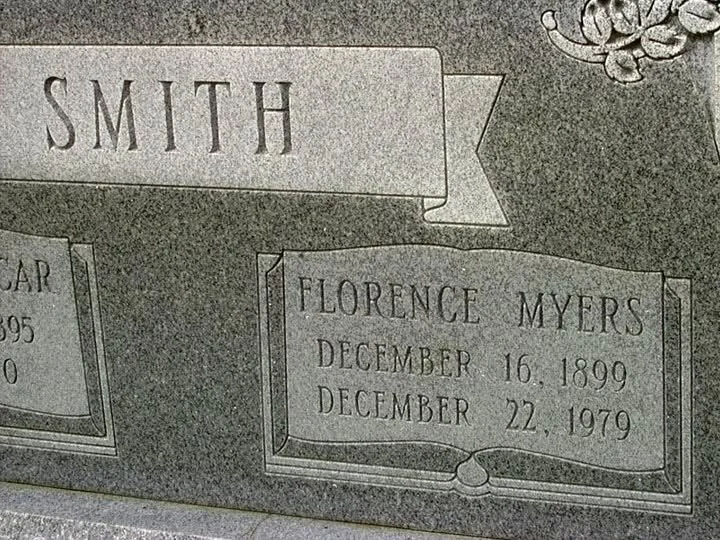
Florence Inez Myers was born in Cordesville in December 1899. In her youth, she attended Carlisle Academy in Bamberg. Her family were farmers.

In October 1918, Myers enlisted in the United States Naval Reserve in Charleston. By the end of WWI, over 12,000 women served with the USNR. Myers was honorably discharged in July 1919.

After the war, Myers returned to Cordesville and farmed with her family. Within a few years, she had married and moved to North Charleston, where she shows up on the 1930 census with her husband and daughter. The Smiths lived in North Charleston through at least 1970, when Frank Smith, retired superintendent of Texaco, died.

Florence Myers Smith died in 1979 and is buried in Pinopolis.

Did you know Mrs. Smith? We'd love to have a photo to include in our database of WWI servicepeople.

Grave marker photo by Mike & Bushy Hartman on FindAGrave.

WWI Story: Ruth Evelyn Bunch

Ruth Evelyn Bunch was born in Town of St. Stephen, SC in February 1901. Her parents were Edward and Mary Bunch.

By the fall of 1918, Bunch had moved to Charleston. She enlisted as a Landsman, Yeoman (F), U.S. Naval Reserve Force in September; it's possible that she lied about her age, because the "The Official Roster of South Carolina Soldiers, Sailors and Marines in the World War" claims she was born in 1899. Bunch was stationed at the Navy Yard in Charleston until Armistice Day.

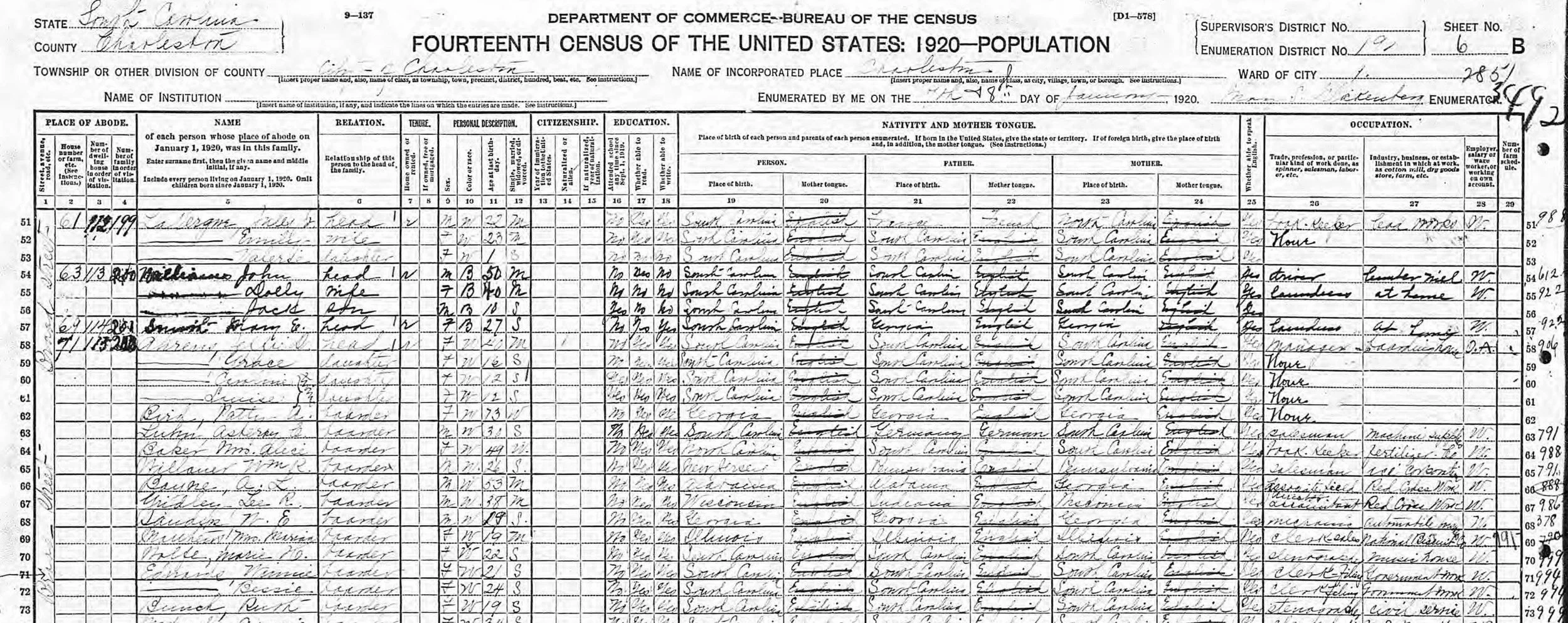
Bunch was discharged as a Yeoman (F) 3rd class in June 1920. Her occupation is listed as "civil service stenographer" on the 1920 census, and she worked as a stenographer at the Port Terminal
through at least 1921.

1920 census entry for Ruth E. Bunch (line 73).

By 1930, Bunch was married to accountant Harry Walker and living in Atlanta. Harry Walker had also been in the service, a sergeant in the Quartermaster Corps. Their time in Atlanta must have been brief, because they were living in the Charleston area again by 1935 and through Harry's death in 1967.

Bunch lived a long life, dying in Florida in 1991.