Artifact Spotlight: "Columbia Calls" recruitment poster

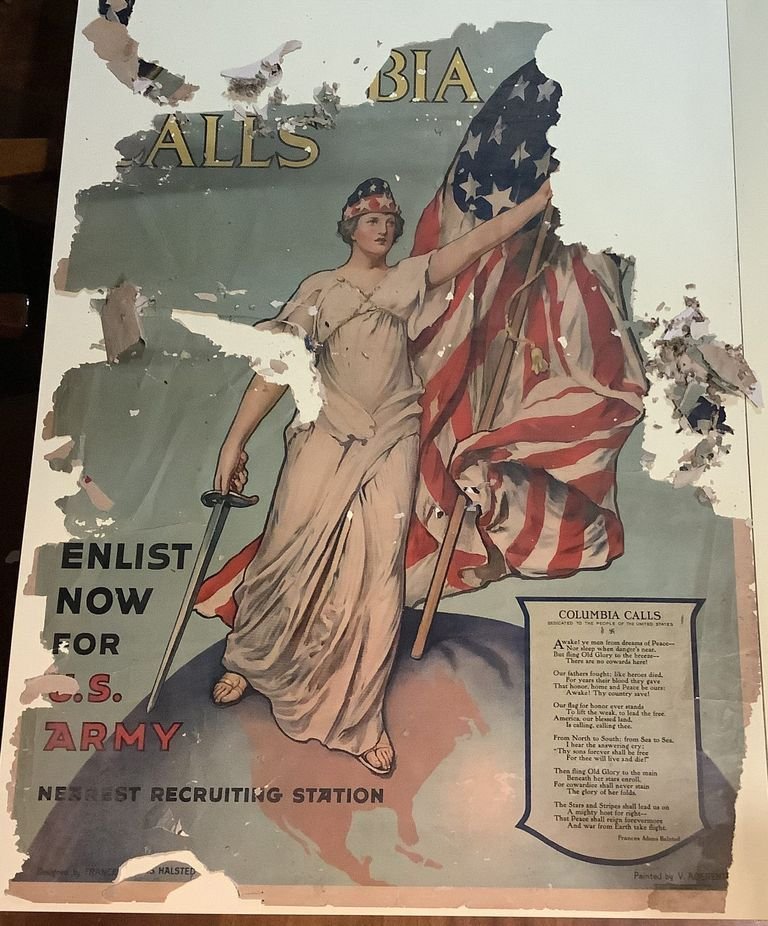
The focus of today’s Artifact Spotlight is this World War I “Columbia Calls” recruitment poster.

MSS29.1.1

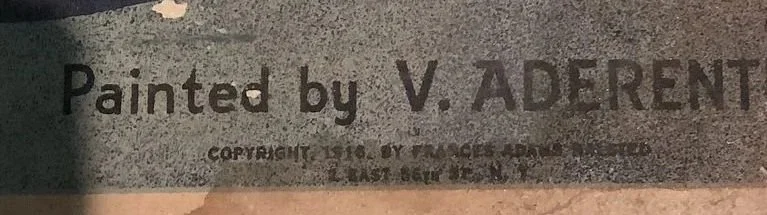
Convinced that the US entering the war was inevitable, Frances Adams Halsted wrote a poem, Columbia Calls, in 1916. After America entered World War I on April 6, 1917, Halsted donated her poem and accompanying image design to the U.S. War Department. Three months later, the New York Times announced plans to print 500,000 copies as a poster; over one million copies were eventually printed. This poster therefore dates to about that year.

The poster is torn on the bottom right and the corner is missing, but most of the text remains. The original poster was painted by Vincent Aderente.

The poster was found in the Museum’s map cabinet with no provenance or donation information - if you know the donor, please let us know! Unfortunately, our copy of this poster is in extremely poor condition and cannot go out on display.

WWI Story: Felix Ferguson

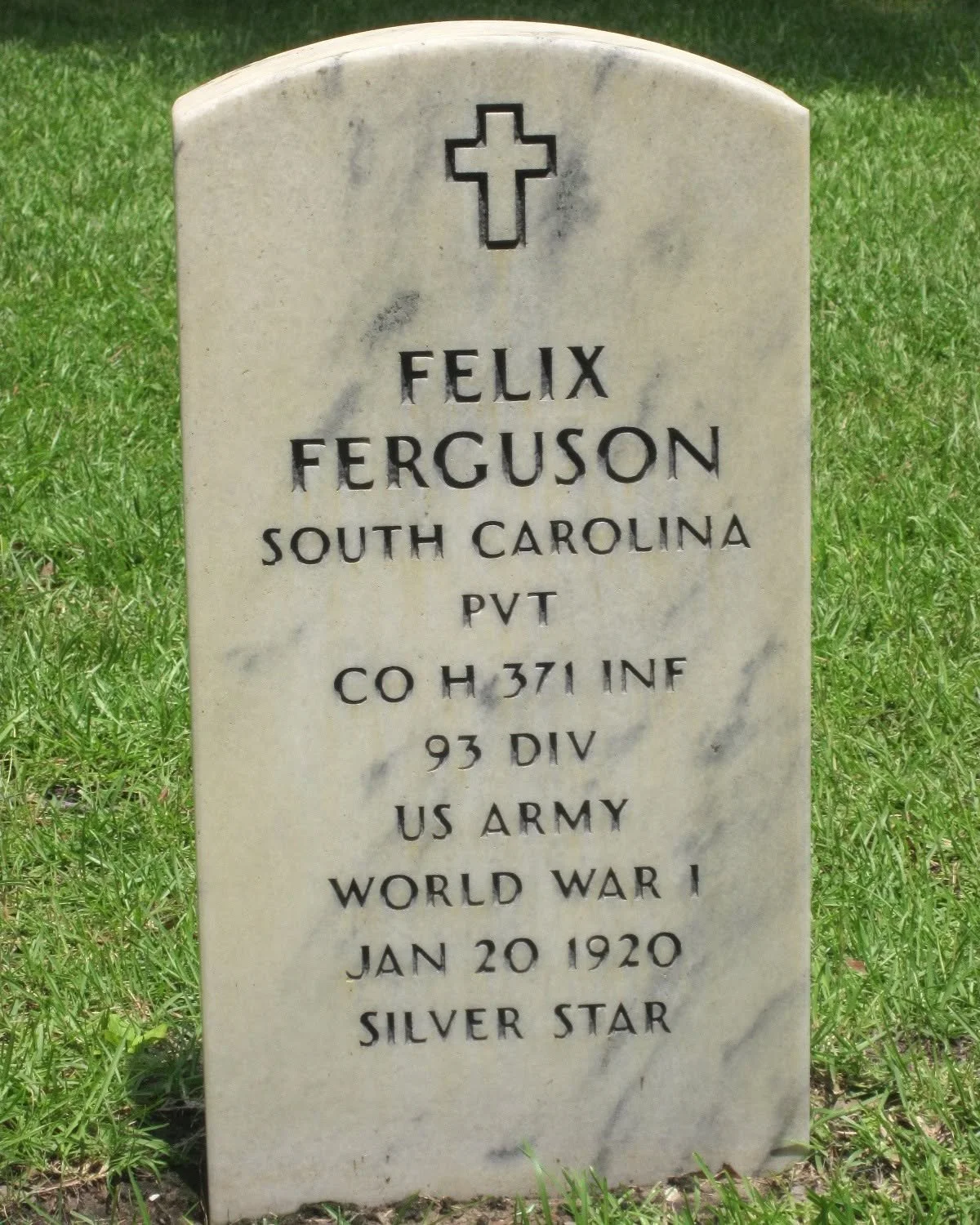
Private Felix Ferguson was born in 1893 or 1895 in Berkeley County, the son of Felix Ferguson and Keziah Brown. His exact birth year is unknown - his death certificate shows 1893, but his draft registration shows 1895. Before the military, he worked as a farmer near Whitesville.

In December 1917, Ferguson registered for the draft at Moncks Corner. By April of the next year, he was a private in the 371st Infantry headed to France; Ferguson listed his place of residence on the departure sheet as "Oakley Depot". He served until February 24, 1919 and was honorably discharged in March 1919. Ferguson was awarded three citations for gallantry in action near Trieres Farm (France) in September 1918, continuing to fight though he had trench foot.

Unfortunately, Ferguson's post-war life was short. He passed away in January 1920, less than a year after returning home. His cause of death was nephritis, with the condition "discovered soon after return from Army." While it's not listed as such, it's possible that Ferguson died of trench nephritis, an infection first recognized during the War. He left behind a partner and children.

Ferguson is buried at Beaufort National Cemetery; his headstone was installed there in 1937. His American Victory Medal and Silver Star are on display here at the Berkeley County Museum.


WWI Story: Florence Inez Meyers

Florence Inez Myers was born in Cordesville in December 1899. In her youth, she attended Carlisle Academy in Bamberg. Her family were farmers.

In October 1918, Myers enlisted in the United States Naval Reserve in Charleston. By the end of WWI, over 12,000 women served with the USNR. Myers was honorably discharged in July 1919.

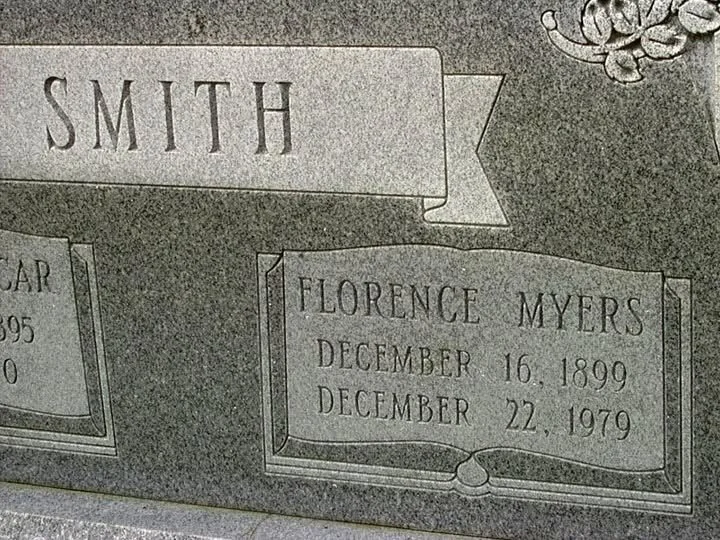
After the war, Myers returned to Cordesville and farmed with her family. Within a few years, she had married and moved to North Charleston, where she shows up on the 1930 census with her husband and daughter. The Smiths lived in North Charleston through at least 1970, when Frank Smith, retired superintendent of Texaco, died.

Florence Myers Smith died in 1979 and is buried in Pinopolis.

Did you know Mrs. Smith? We'd love to have a photo to include in our database of WWI servicepeople.

Grave marker photo by Mike & Bushy Hartman on FindAGrave.

WWI Story: Ruth Evelyn Bunch

Ruth Evelyn Bunch was born in Town of St. Stephen, SC in February 1901. Her parents were Edward and Mary Bunch.

By the fall of 1918, Bunch had moved to Charleston. She enlisted as a Landsman, Yeoman (F), U.S. Naval Reserve Force in September; it's possible that she lied about her age, because the "The Official Roster of South Carolina Soldiers, Sailors and Marines in the World War" claims she was born in 1899. Bunch was stationed at the Navy Yard in Charleston until Armistice Day.

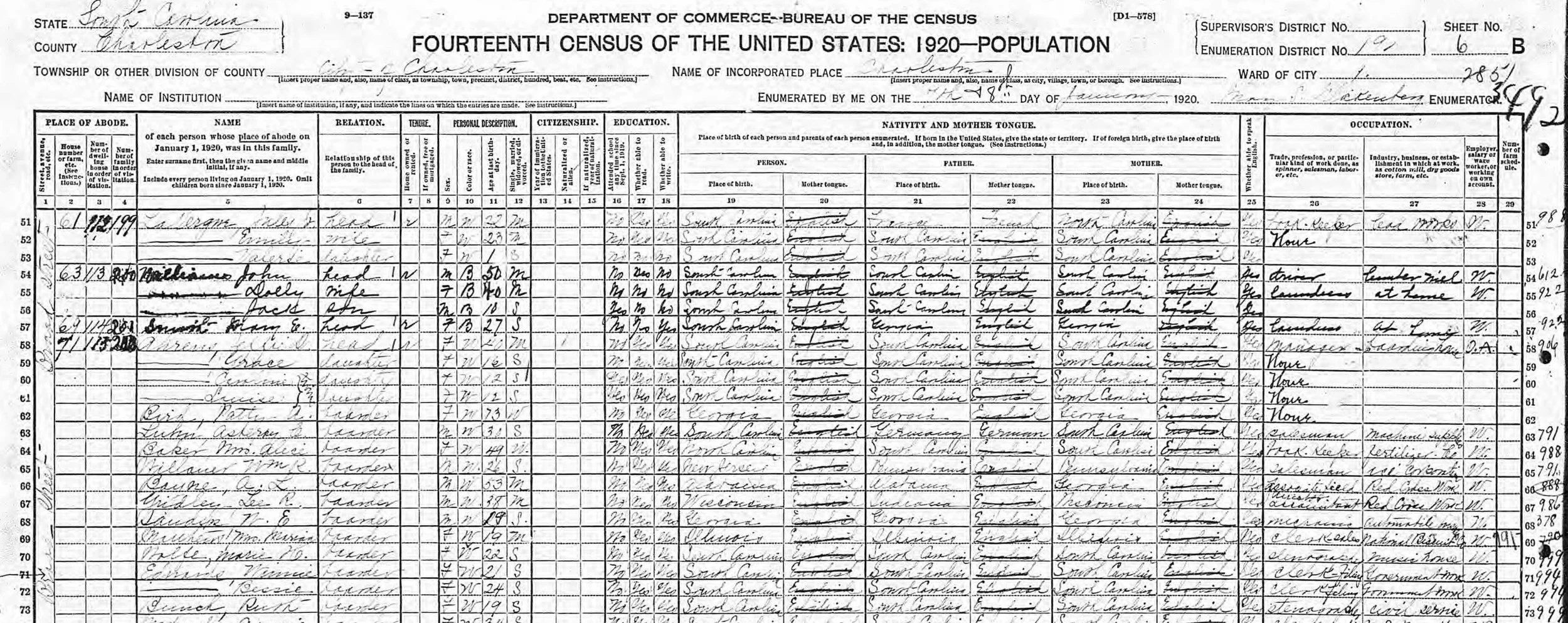
Bunch was discharged as a Yeoman (F) 3rd class in June 1920. Her occupation is listed as "civil service stenographer" on the 1920 census, and she worked as a stenographer at the Port Terminal
through at least 1921.

1920 census entry for Ruth E. Bunch (line 73).

By 1930, Bunch was married to accountant Harry Walker and living in Atlanta. Harry Walker had also been in the service, a sergeant in the Quartermaster Corps. Their time in Atlanta must have been brief, because they were living in the Charleston area again by 1935 and through Harry's death in 1967.

Bunch lived a long life, dying in Florida in 1991.