National Prune Day

June 15 is celebrated as National Prune Day. For more information, visit the California Prune website.

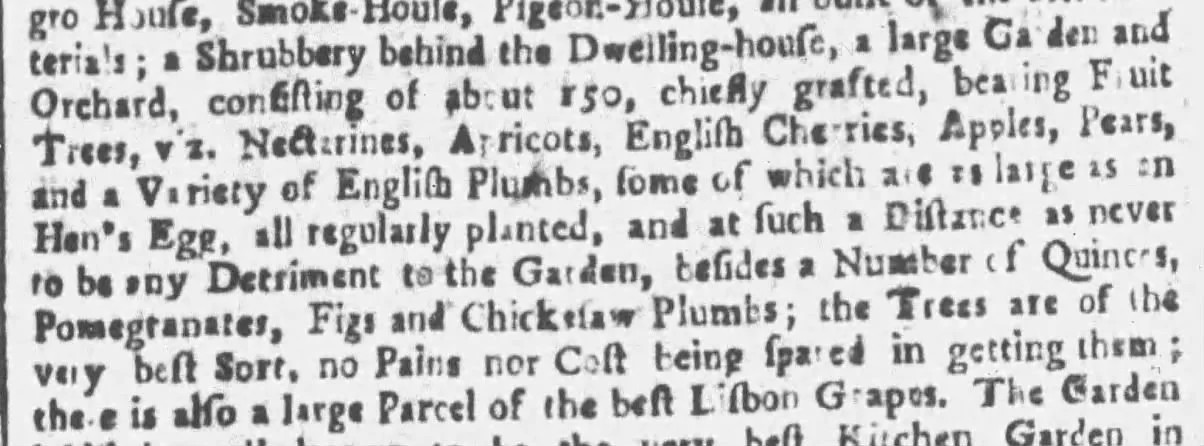
The South-Carolina and American General Gazette, Mar 13, 1777.

There are over a dozen varieties of plums native to North America. Early colonists would have had access to the wild American plum, Prunus americana, here in South Carolina. Prunus angustifolia, the Chickasaw plum, is native to the continent, but was likely introduced to South Carolina via Native American trade. Notice in the 1777 property ad that the orchard contains plum trees of both English and Chickasaw varieties. Henry Laurens also introduced French plum trees into the Lowcountry. As early as 1739, traders in Charleston were importing “Raisins of the Sun and Prunes” for the colonists’ enjoyment. (An interesting, non-prune-related note: importer William Welfit noted in the same July 1739 notice that he would take payment in “Good Rice, Pich (sic.), Tar and Deer Skins” in addition to “ready Money.”)

Horticultural experimentation with native plums occurred throughout the following centuries, but most larger cities and markets relied on important or non-native plums for their money-making. Not all plums are good for making prunes; both the wild American plum and the Chickasaw plum can be dried to eat, but other varieties are better for this purpose. Today, prunes most commonly come from the European plum.

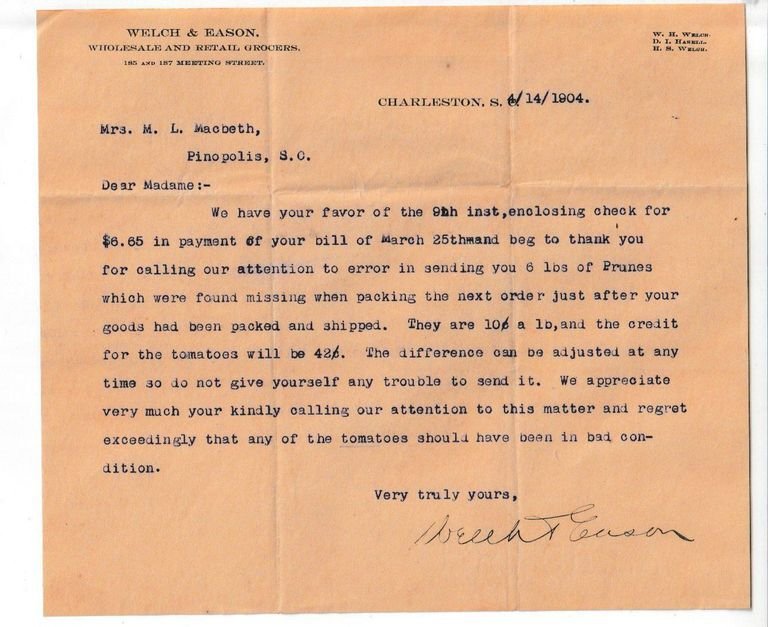
MSS02.2.31

In the spring of 1904, Mrs. Mary Louise (Gaillard) Macbeth of Pinopolis ordered groceries from Welch & Eason in Charleston. She was accidentally sent six pounds of prunes! We don’t know if Mrs. Macbeth settled up with the grocers, but we do have several other receipts from the Macbeth family around the turn of the 20th century.

National Iced Tea Day

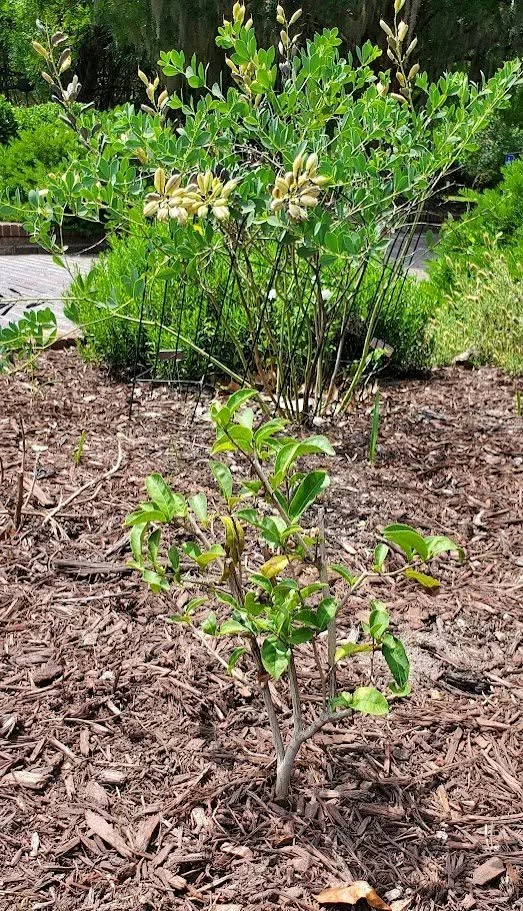
Today is National Iced Tea Day. Pictured here is one of 6 tea plants recently added to the Museum gardens.

Though tea was consumed locally in the 17th and 18th century, it was mostly imported; Native Americans consumed caffeinated tea-like drinks made from yaupon, and this "Carolina tea" was eventually (and briefly) adopted by the white colonists.

French botanist Francois Andre Michaux first planted Camellia sinensis in the Lowcountry in 1799. (If you're familiar with the area around the Charleston International Airport, his name may ring a bell!) This tea did well but was generally unpopular because the flavor was different than the usual bohea or green teas.

Dr. Junius Smith started a commercial tea farm in Greenville in 1848, but it only lasted a few years because of his untimely death. Other tea farms came and went through the following decades. In 1893, Pinehurst Plantation in Summerville plucked its first native-grown tea. Pinehurst flourished until 1915.

In the 1960s, Lipton Tea Company took root cuttings from the former Pinehurst site and started new farms in Summerville and on Wadmalaw Island. In 2003 the Wadmalaw farm was purchased by Bigelow, who still own and operate Charleston Tea Garden today. The American Black Tea grown there is the only commercially-sold tea grown in the United States.

Since 1995, iced tea has been the official Hospitality Beverage of South Carolina.