Gravestone Symbolism: Lamb Stevens

We continue our look at local gravestone symbolism with today’s post about Lamb Stevens (ca. 1766-1868). He is buried in Cherry Hill Community Cemetery, located directly next to the fairgrounds in Ladson.

Lamb Stevens, a Black man, was born in North Carolina in about 1766. He purchased his freedom and came to South Carolina; the order of these events isn’t precisely known. Stevens was in the Charleston area by 1833, when an ad searching for a runaway enslaved person was published in his name. In 1858, Stevens purchased Cherry Hill Plantation in modern-day Ladson. Stevens had substantial wealth and land holdings; in the 1860 “slave schedule,” he is listed as also owning 13 enslaved people. Stevens lived to approximately 102 years old and left his properties to his family.
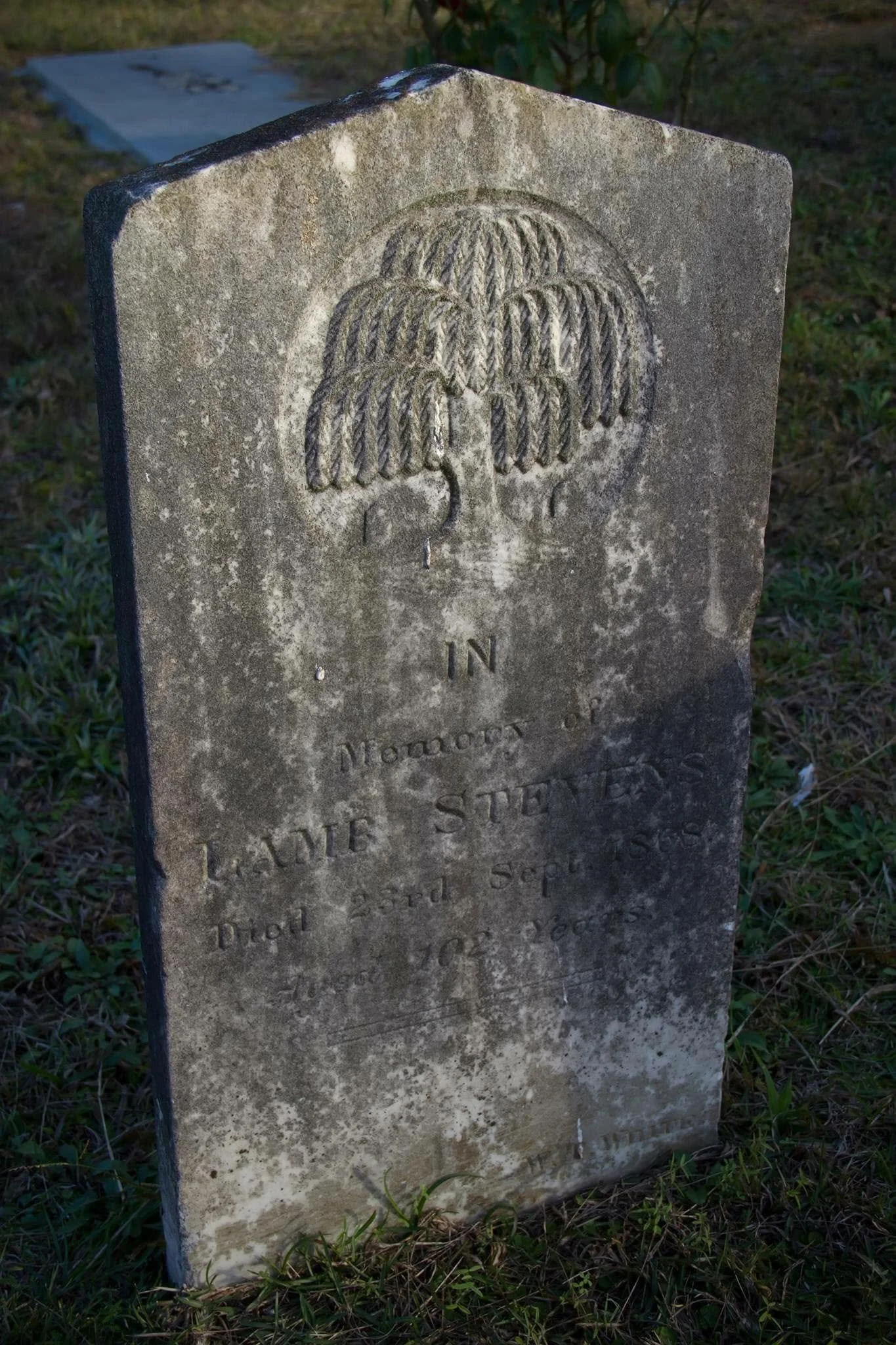
Photo by Brandon Coffey.

Stevens’s grave marker is the oldest legible in Cherry Hill Cemetery. The marker is topped with an engraving of a willow tree covering two gravestones. A willow tree was one of the most popular 19th-century gravestone symbols. The willow may represent grief and memory, but also the immortality granted in the afterlife.

The marker reads:
IN
Memory of
LAMB STEVENS
Died 23rd Sept. 1868.
Aged 102 Years.
Gravestone Symbolism: George Lynes Sr.

We continue our look at Berkeley County gravestones and gravestone symbolism with this marker for George Lynes. Lynes (1807-1870) and his wife Lizzie are both buried in the Saint James Goose Creek Chapel of Ease in Strawberry. The Lynes family owned Foxbank Plantation, and George worked as an overseer on several other area plantations.

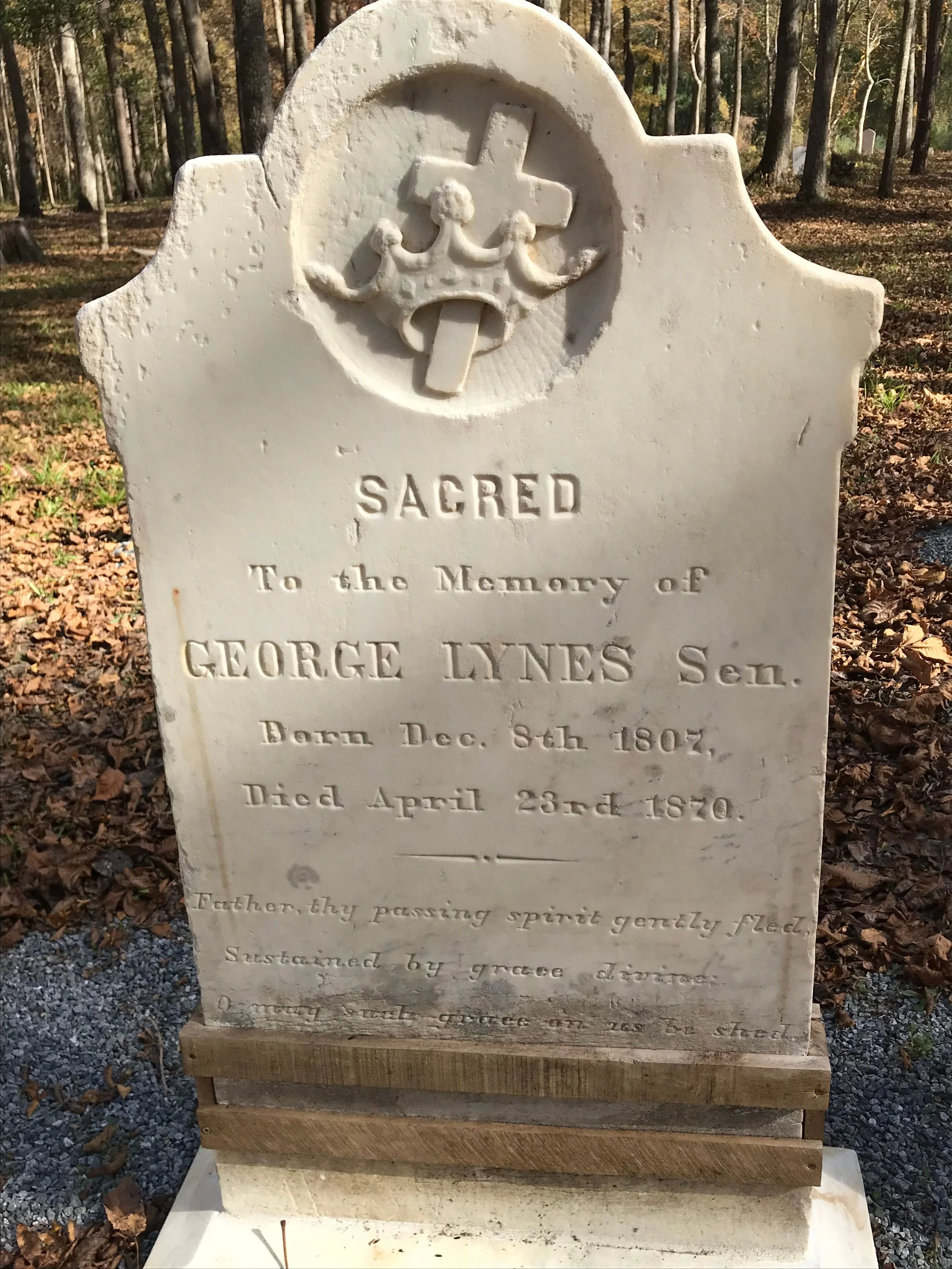
Photo by Camposanto on FindAGrave.

His original marker includes a cross and a crown. This Christian symbolism represents “the unfading crown of glory” (1 Peter 5:4) to be received in Heaven. It may also represent the deceased’s victory over death through Christ.

Early in 2026, the original marker was cleaned and reinstalled inside of a new, stronger stone; the base of the original marker was beginning to crack and text was partially buried beneath the ground. The new stone has the same text as the old on the reverse.

The marker reads:
SACRED
To the Memory of
GEORGE LYNES Sen.
Born Dec. 8th 1807,
Died April 23rd 1870.
—
Father, thy passing spirit gently fled,
Sustained by grace divine.
O may such grave on us be shed
and make our end Like Thine.

Gravestone Symbolism: Paul Mazyck

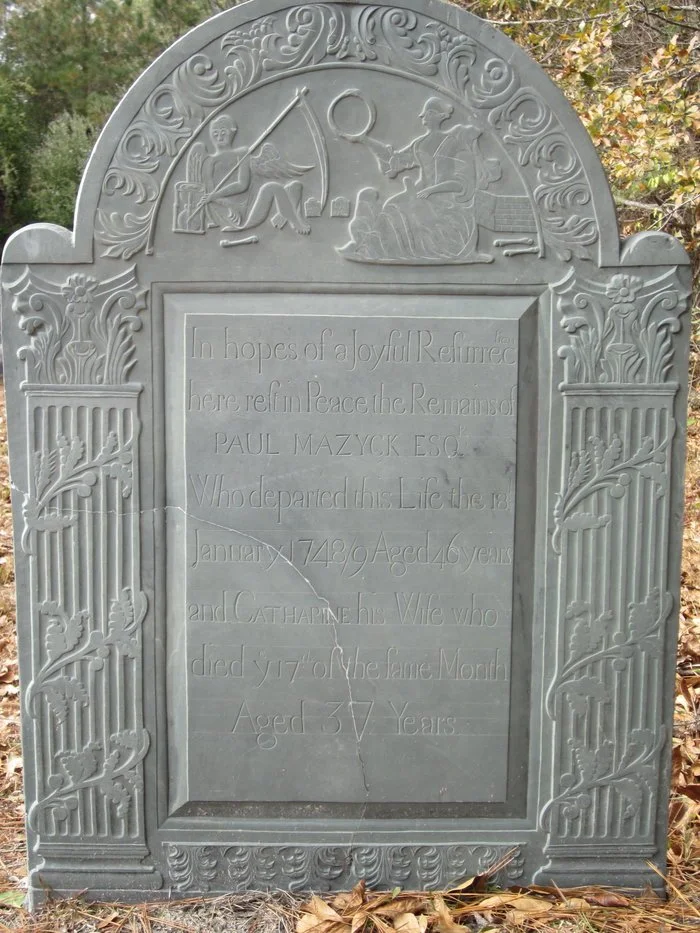
Paul (1702-1749) and Catharine (1711-1749) Mazyck’s slate grave marker in Black Oak Cemetery is one of the oldest legible in the county. It was moved from Pooshee Cemetery during the Santee Cooper Project. The Mazycks may have been visiting Catharine’s stepfather at Pooshee when they died.

Photo by David DuBose.

The hourglass on the left of the marker represents the quick passing of time; the winged person, leaning on the hourglass, perhaps Death personified, was common on early 18th-century tombstones like this one. Next to the scythe is an ouroboros. Curiously, while three bones are carved on the stone, there is no skull to make a skull-and-crossbones. Columns bound the marker's text; whole columns like these often mean a life well-lived.

The marker reads:
In hopes of a Joyful Resurrection
here rest in Peace the Remains of
PAUL MAZYCK ESQ.
Who departed this Life the 18th
January 1748/9 Aged 46 years
and CATHARINE his Wife who
died the 17th of the same Month
aged 37 Years